Basis to proceed
Diagnose the project's present condition and evidence base, and confirm sponsor authority, project control and decision definition.
Approach
Regenera makes physical, ecological, commercial and institutional dependencies visible before they become delivery constraints.
Site intelligence
Conservation areas, watershed, productive land and infrastructure corridors are mapped before the development envelope is drawn. What can be built, and where, is a conclusion, not a starting assumption.
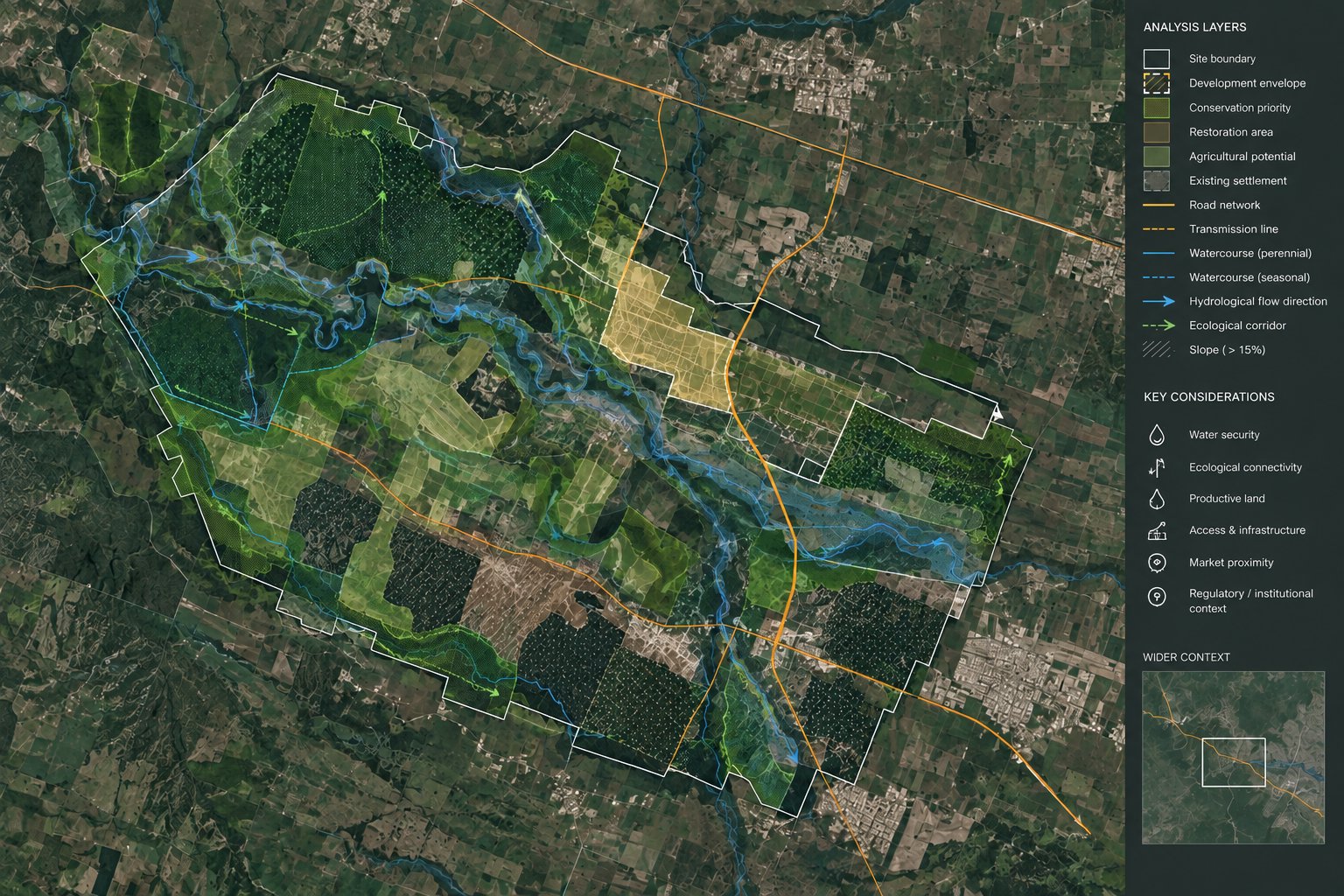
Ecological intelligence
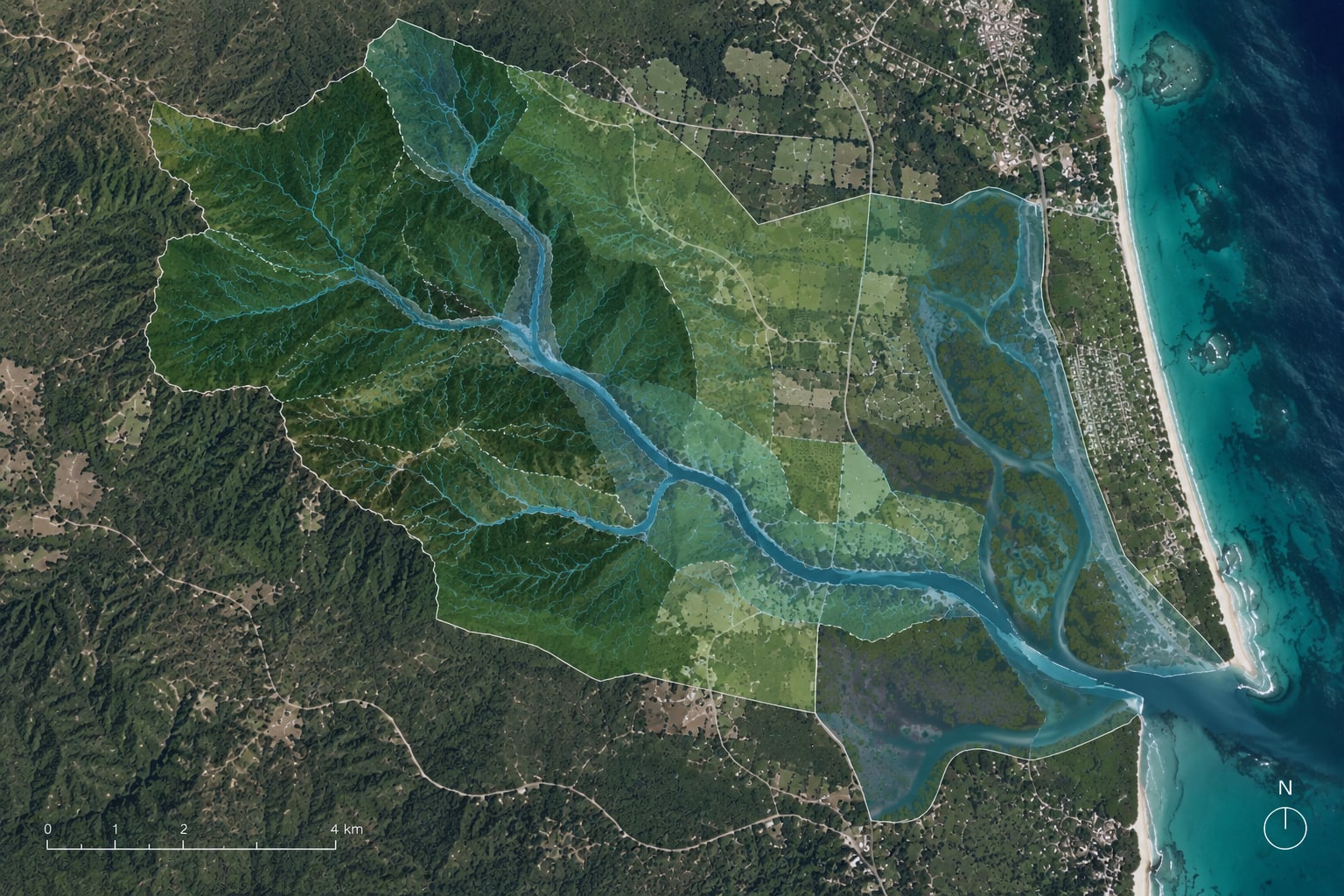
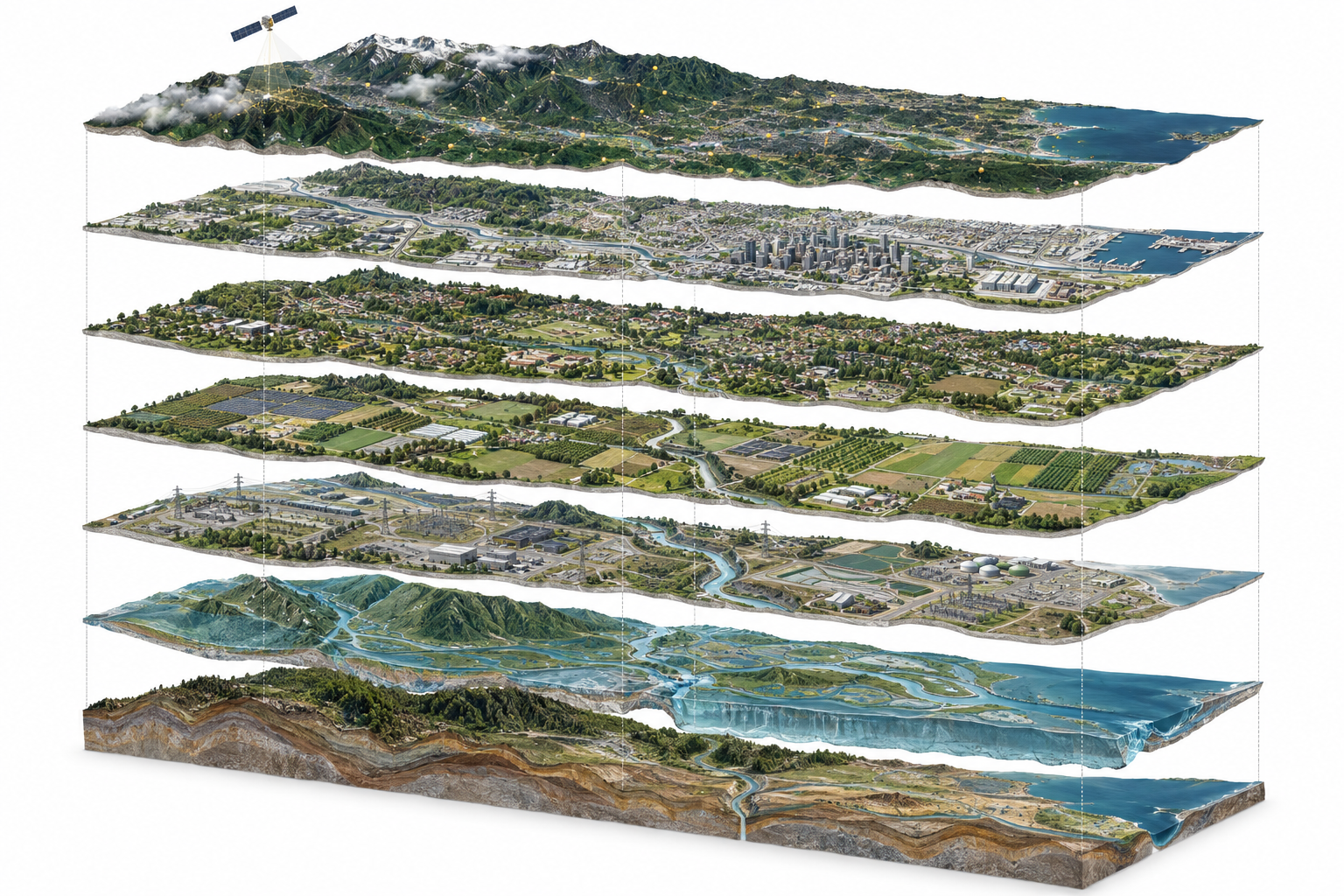
Seven-layer model
The model exposes where one decision changes another, from land and water control to infrastructure, institutions and capital.
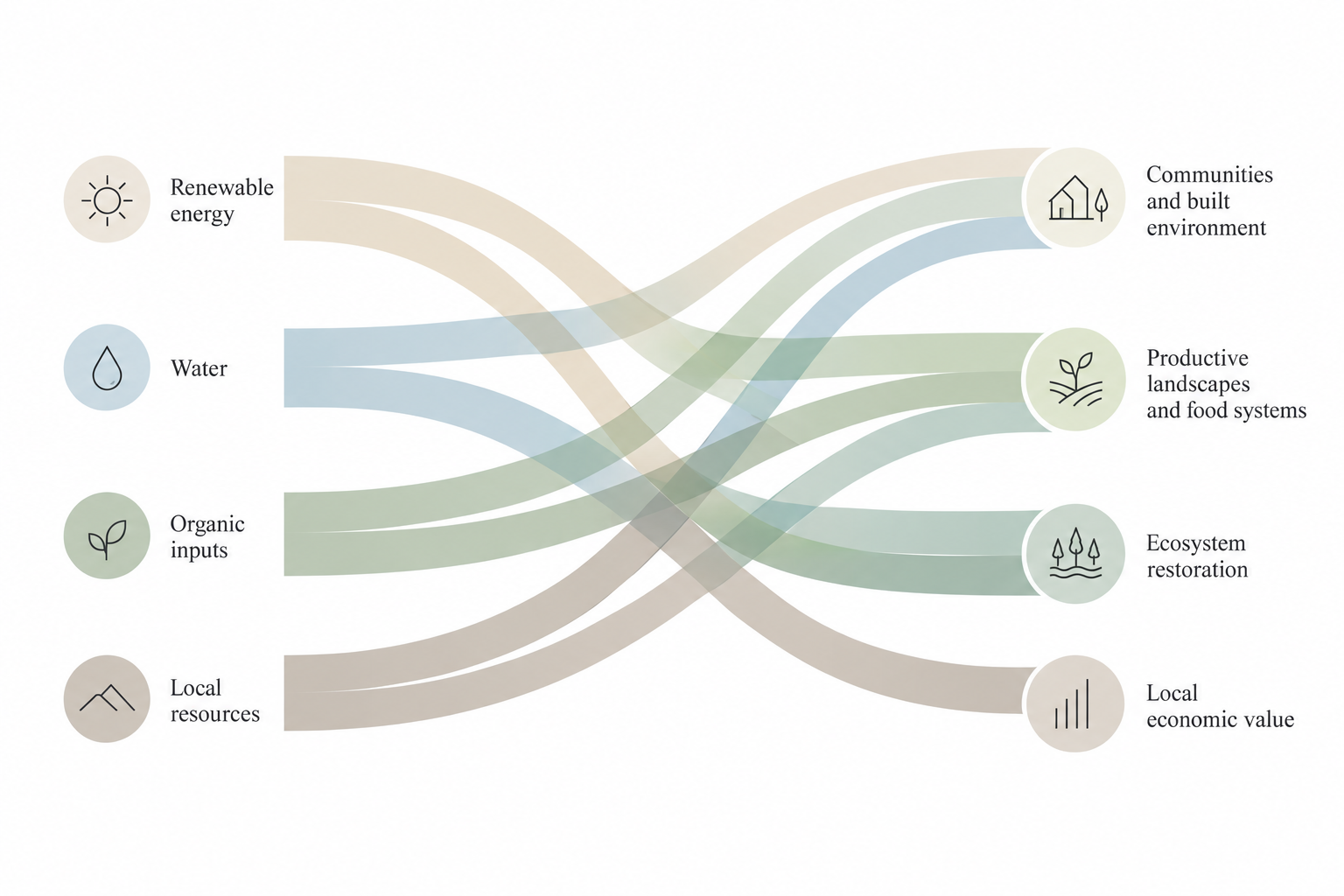
Systems integration
Project lifecycle
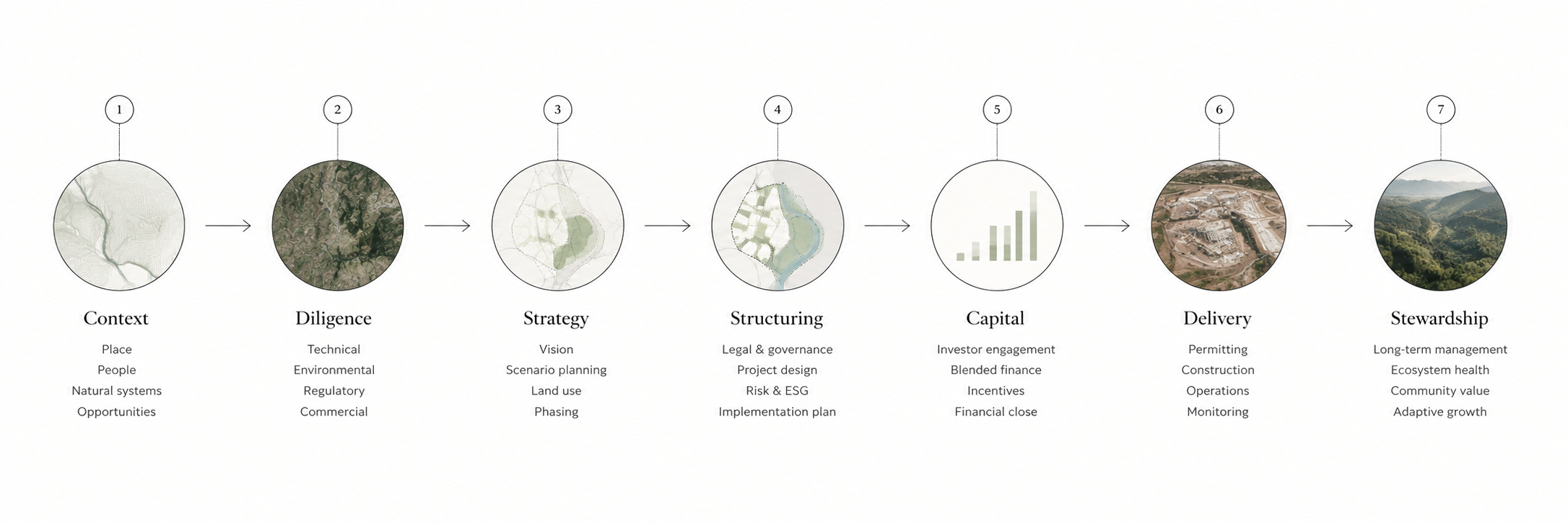
Method
Diagnose the project's present condition and evidence base, and confirm sponsor authority, project control and decision definition.
Architect the workstreams and assemble the required technical, ecological, commercial and institutional specialists to establish the resource basis, technical concept and stakeholder path.
De-risk the project by resolving material gaps in the order the next decision requires, producing the commercial logic, material documents and assigned responsibility.
Align capital to stage, use of proceeds, risk and structure, then advance the project through its next authorized milestone.